
•
9 minutes
For qualitative research and focus groups, Qualtranscribe Instant Draft is the only AI transcription tool on this list built specifically for research workflows, with Smart Insights, HIPAA-compliant PII redaction, and a guarantee that your recordings will never train an AI model. For European researchers, Happy Scribe covers the most ground on GDPR and language range. For developers who want to build their own pipeline, AssemblyAI has the best underlying model. For everyone else, check the data handling terms before you upload a single file.
1. Qualtranscribe's Instant Draft: Best Overall for Qualitative Research
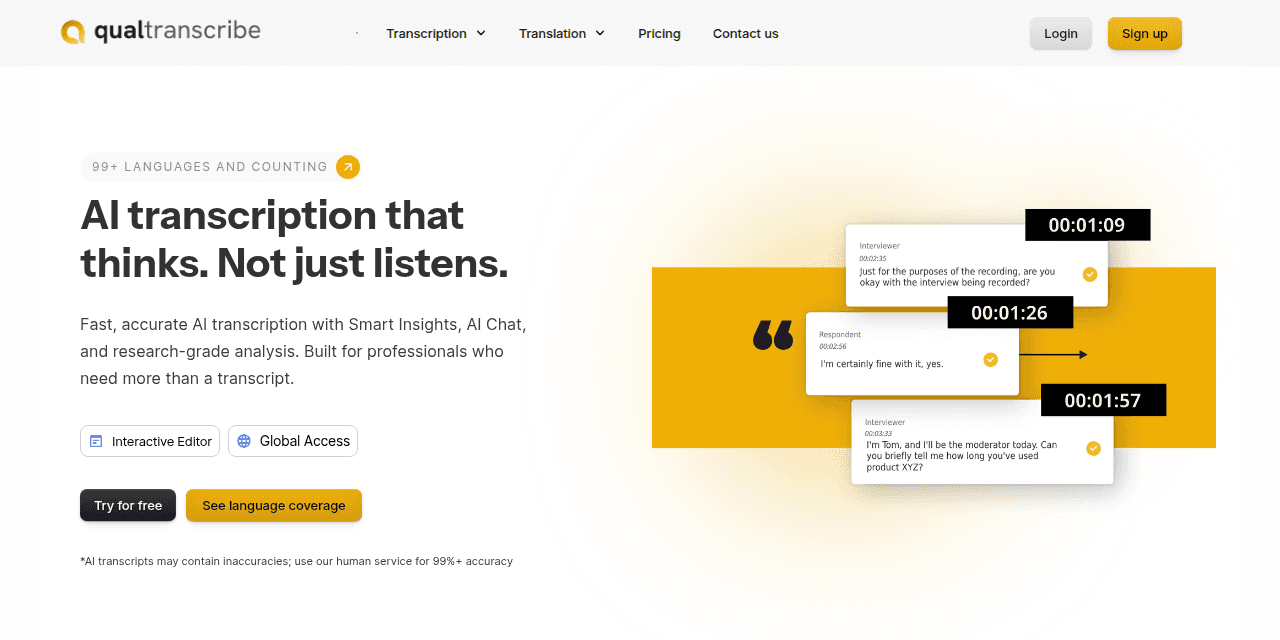
Instant Draft is the only AI transcription tool on this list designed from the ground up for research workflows rather than adapted from a general-purpose meeting tool. Upload your recording and receive a transcript in minutes with speaker identification, timestamps, and Smart Insights, including themes, key quotes, and sentiment patterns surfaced automatically without any manual coding.
The compliance picture is what separates it from everything else here. Your recordings are never used to train AI models. HIPAA-compliant PII redaction is built in via the Anonymize option. For focus groups, Smart Insights handles multi-speaker sessions and surfaces patterns across participants automatically.
The honest limitation: AI accuracy on heavily accented speech or poor audio still benefits from human review. For final verbatim transcripts on IRB-governed studies, human transcription remains the right call. Instant Draft fits first-pass analysis, early-stage exploration, and projects where speed matters more than verbatim precision.
Pricing: Free with 75 minutes included, no credit card required. Pro $18/month including 1,200 minutes and Smart Insights. Unlimited $35/month.
Languages: 99+.
Compliance: HIPAA, GDPR, PIPEDA. Zero AI training on your data.
Best for: Qualitative research, focus groups, first-pass analysis, thematic exploration.
2. Otter.ai: Best for Live Meeting Transcription
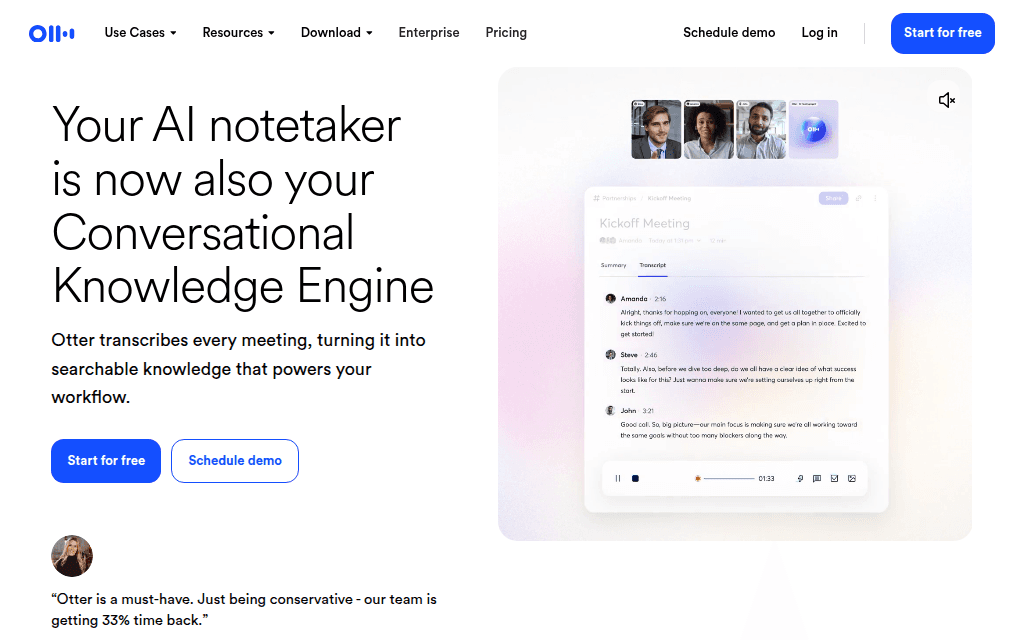
Otter.ai is widely recognized for meeting transcription. It transcribes in real time, which is genuinely useful for live focus groups where you want notes as the session happens. Speaker identification works reasonably well in clean audio. Collaboration features let multiple team members access and annotate transcripts simultaneously.
HIPAA compliance was achieved in July 2025 and is available on Enterprise plans only with a signed Business Associate Agreement. Lower-tier plans do not qualify. Otter confirms that customer data is not used to train third-party AI providers' models. For research involving sensitive participant data, you need the Enterprise plan and a BAA in place before uploading any files.
Pricing: Free tier available. Pro $16.99/month. Business $30/month per user. Enterprise pricing on request.
Languages: English primary, limited multilingual support.
Compliance: SOC 2 Type II, GDPR, HIPAA on Enterprise with BAA.
Best for: Live interview notes, team collaboration, meeting transcription.
3. AssemblyAI: Best for Developers and Custom Workflows
AssemblyAI is an API rather than a consumer product. Developers use it to build transcription into their own tools and pipelines. The accuracy is among the best available for English speech, and it handles multi-speaker diarization better than most general-purpose tools. For research teams with technical capacity who want to build custom analysis workflows, it's a serious option.
There's no out-of-the-box research interface. You need to build what you need or use a tool built on top of the API. AssemblyAI powers Qualtranscribe's Instant Draft behind the scenes, which is part of why the compliance and accuracy hold up for research use.
Pricing: Pay-as-you-go from $0.37/hour. Volume pricing available.
Languages: 99+ via Universal-2 model.
Compliance: SOC 2 Type II, HIPAA compliant, GDPR compliant.
Best for: Developers, custom research pipelines, high-volume automated workflows.
4. Sonix: Best for Multilingual Research Teams
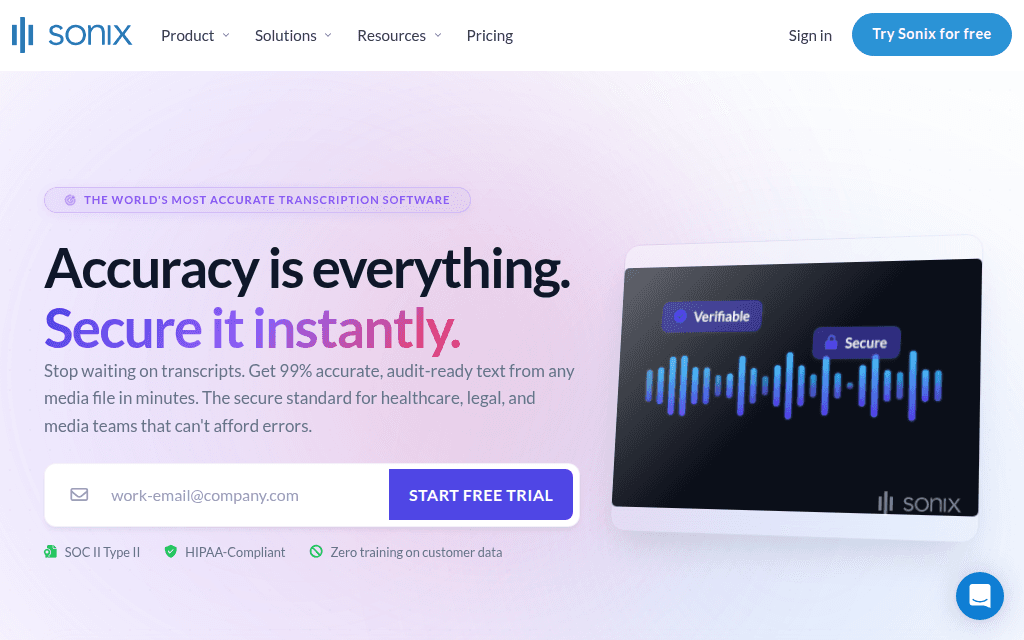
Sonix has built a solid reputation for multilingual AI transcription across research and academic contexts. It supports 40+ languages with reasonable accuracy and a clean in-platform editor for reviewing and correcting transcripts. The automated translation feature is useful for teams analyzing content across languages. Export options include formats compatible with qualitative analysis software, though not natively formatted for NVivo import.
Pricing: Pay-as-you-go $10/hour. Standard $22/month. Premium $44/month.
Languages: 40+.
Compliance: SOC 2 compliant, GDPR compliant. HIPAA available on Premium plans.
Best for: Multilingual research teams, international focus groups, content requiring translation.
5. Trint: Best for Collaborative Editorial Teams
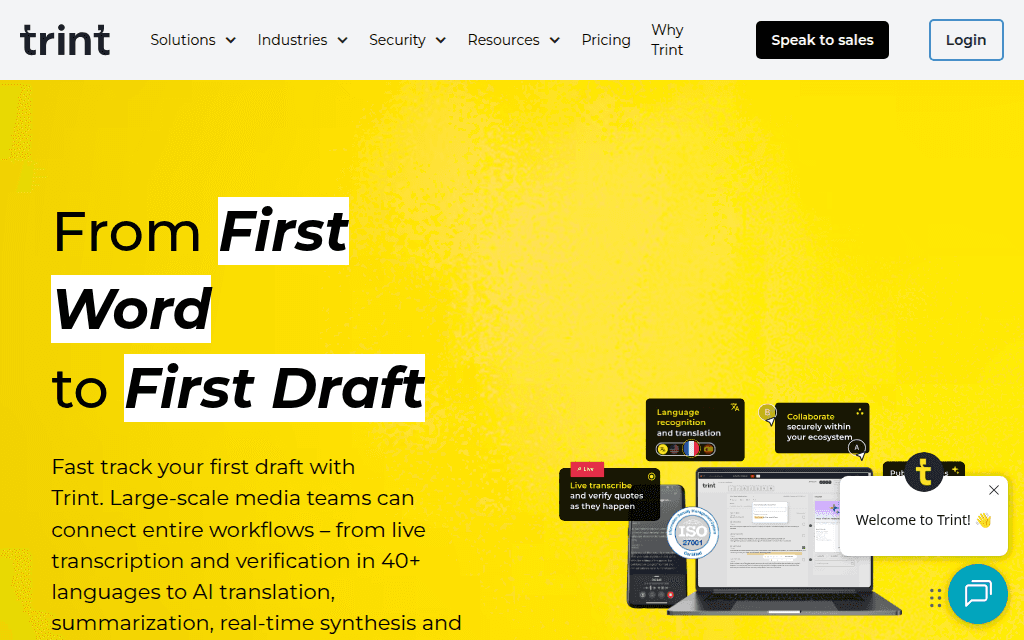
Trint is a well-designed AI transcription platform with strong collaboration features. Multiple team members can work on the same transcript simultaneously, leaving comments and making corrections in real time. It's widely used in journalism and media research. The transcript editor is clean and the search across multiple transcripts is genuinely useful for thematic analysis across a large dataset.
GDPR compliant. HIPAA compliance is not confirmed in Trint's public security documentation as of June 2026. Not purpose-built for qualitative research workflows and does not offer NVivo-ready export formatting.
Pricing: From $48/month per user.
Languages: 40+.
Compliance: GDPR compliant. HIPAA not confirmed in public documentation as of June 2026.
Best for: Collaborative research teams, journalistic research, editorial workflows.
6. Descript: Best for Video-Heavy Research
Descript is an audio and video editing platform with AI transcription built in. The standout feature for researchers is that editing the transcript automatically edits the audio or video. For focus groups recorded on video where you need both a transcript and edited clips for presentations, it's genuinely useful. Transcription accuracy is good on clean recordings. Multi-speaker identification works but isn't as strong as specialist tools on complex group dynamics.
SOC 2 Type II certified and GDPR compliant. HIPAA compliance is not referenced in Descript's public security documentation. Less suitable for research involving sensitive health-related participant data.
Pricing: Free tier with limits. Creator $24/month. Pro $40/month.
Languages: English primary, limited additional languages.
Compliance: SOC 2 Type II, GDPR compliant. HIPAA not confirmed in public documentation.
Best for: Video-based research, presentations requiring clips, mixed audio and video workflows.
7. Fireflies.ai: Best for Interview Note-Taking
Fireflies.ai connects directly to Zoom, Teams, and other meeting platforms and transcribes automatically without any manual upload. For researchers running interviews via video call, that friction reduction is real. Speaker identification is automatic. The AI summary feature pulls key topics from the recording, and Fireflies explicitly states that meeting content is never used to train AI models, with a zero data retention policy enforced with all third-party vendors.
HIPAA compliance is available on Enterprise plans only with a signed BAA and Private Storage enabled. Both are required for HIPAA compliance. Lower-tier plans do not qualify.
Pricing: Free tier available. Pro $18/month. Business $29/month. Enterprise pricing on request.
Languages: English primary, limited multilingual support.
Compliance: SOC 2 Type II, GDPR, HIPAA on Enterprise with BAA and Private Storage. Zero data retention policy with all vendors.
Best for: Video call interviews, quick meeting notes, research teams running high volumes of video interviews.
8. Happy Scribe: Best for European Research
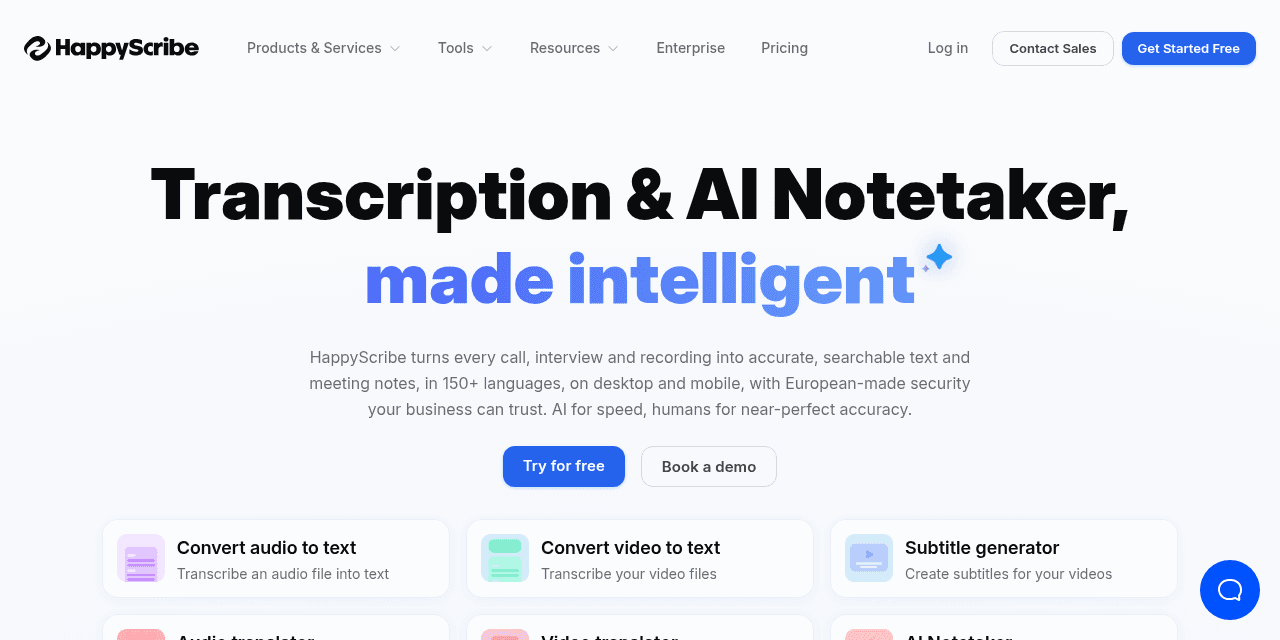
Happy Scribe is a European-based AI transcription service with strong GDPR credentials and support for 60+ languages. For European researchers who need GDPR-native data handling and multilingual coverage, it's a practical option. The in-platform editor is clean and the export options cover most common formats. No IRB-specific workflows or NVivo-ready formatting.
Important to note: Happy Scribe is not HIPAA compliant. Their own help center confirms this. For US healthcare research or any study involving protected health information, it's not a suitable option.
Pricing: Pay-as-you-go $0.20/min. Subscription from $17/month.
Languages: 60+.
Compliance: GDPR compliant, ISO 27001 certified. Not HIPAA compliant.
Best for: European researchers, GDPR-native workflows, multilingual European content with no US health data requirements.
9. Whisper by OpenAI : Best Free Option
OpenAI's Whisper is an open-source speech recognition model that runs locally or via API. The accuracy is genuinely impressive, particularly on accented speech and technical terminology. Because it can run locally on your own hardware, there are no third-party data handling concerns. Your recordings never leave your machine, which is a meaningful advantage for research involving sensitive participant data.
The trade-off is that there's no consumer interface. You need technical knowledge to install and run it, and there are no built-in research features like speaker diarization or Smart Insights.
Pricing: Free and open source. API usage from $0.006/min.
Languages: 99+.
Compliance: Fully controllable if run locally. No third-party data handling concerns.
Best for: Technical researchers, privacy-sensitive research, teams with local computing capacity.
10. Rev AI : Best for High-Volume English Transcription
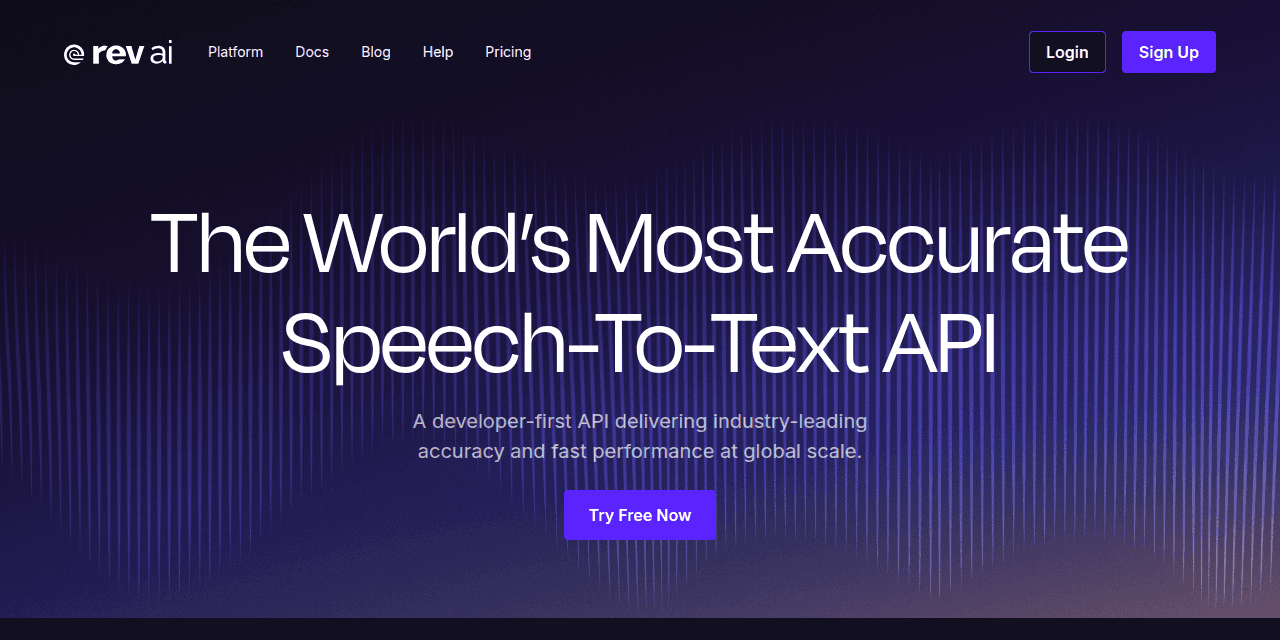
Rev's AI transcription product delivers fast, accurate English transcription at competitive rates. Speaker identification is available. GDPR compliant and SOC 2 Type II certified. HIPAA compliance is available for enterprise clients.
The same caveat applies here as with Rev's human transcription service: Rev's Terms of Service updated in 2023 permits the use of customer recordings to train its proprietary AI by default. Opt-out requires emailing Rev explicitly. For research involving sensitive participant data, this warrants attention before uploading any files.
Pricing: From $9.99/month. Pay-as-you-go available.
Languages: English and Spanish primary.
Compliance: GDPR compliant, SOC 2 Type II. HIPAA for enterprise. AI training opt-out required.
Best for: High-volume English transcription, corporate research, content without strict participant data requirements.
When to Use AI and When to Use Human Transcription
For early-stage exploration, AI transcription changes what's possible. Running Smart Insights across twenty interviews before formal coding begins can surface patterns and save hours of initial analysis. Qualtranscribe's Instant Draft does this well.
For final verbatim records on IRB-governed studies, research requiring participant de-identification, and complex multi-speaker focus groups where accuracy on overlapping speech matters, human transcription is the appropriate standard. AI still struggles with heavy cross-talk, strong regional accents, and technical terminology in low-resource languages.
Most qualitative research workflows benefit from both: AI for speed and early exploration, human transcription for the records that go into your analysis, dissertation, or publication.
Three Questions to Ask Before You Upload
Will my recordings be used to train AI models? Check the terms of service. Several popular platforms do this by default. Rev requires an explicit opt-out. Qualtranscribe and Fireflies.ai both explicitly prohibit it.
Is the service compliant with the frameworks that apply to my research? HIPAA for health data, GDPR for EU participants, PIPEDA for Canadian research. Several services on this list offer HIPAA only on enterprise plans, not as standard.
Does it support participant de-identification? For studies requiring anonymization, built-in PII redaction saves significant time compared to doing it manually after delivery.
Related Reading
Turn your recordings into analysis-ready transcripts.
Human Transcription
Clean verbatim and full verbatim transcripts, delivered by specialist transcriptionists
AI Transcription
Instant Draft powered by AI, with Smart Insights for analysis-ready output
Translation Services
Accurate translation across 99+ languages for multilingual research workflows
Keep reading
Related articles

The Best Transcription Services for Focus Groups in 2026
Focus groups generate some of the most demanding audio in qualitative research. Six to twelve people talking, sometimes over each other, sometimes in a room with bad acoustics, sometimes over a Zoom call with background noise from a home environment. Getting that audio into a clean, usable transcript is where a lot of research budgets and timelines get tested. Not every transcription service handles this well, and the right one often depends on the kind of focus group you're actually running.
Read article

Portuguese Transcription in Latin American Field Research: A Practical Guide
A research team returns from fieldwork across São Paulo, Recife, and Porto Alegre. Three cities, three clearly distinct accents, two weeks of interviews. Back at the institution, someone books a Portuguese transcriptionist. Nobody specifies which variety of Portuguese they need. The transcripts come back with Nordestino expressions normalized to São Paulo usage, a participant whose name appears in three different spellings, and no timestamps. Technically, the words are mostly right. As research data, the transcripts are close to unusable. This happens because transcription for field research in Brazil requires decisions that general transcription services don't prompt researchers to make.
Read article

How to Turn a 60-Minute Webex Recording into a 2-Minute Read
Picture this: someone drops a Webex link in your inbox with a note saying the answer to your question is "somewhere in the recording." Or you ran a 60-minute KOL interview three days ago, need to quote it accurately in a briefing, and your memory of what was said is already fuzzing at the edges.
Read article
© 2026 Qualtranscribe LLC. Services Provided Globally