
•
8 mins

If your research has IRB requirements, participant confidentiality obligations, or needs NVivo-ready formatting, Qualtranscribe is the only service here built specifically for that. GoTranscript wins on language range at 140+ languages and lower per-minute pricing. Rev is fastest for English. TranscribeMe is cheapest if you are willing to accept tiered accuracy. Pick based on your actual compliance requirements, not price alone.
1. Qualtranscribe: Built for Qualitative Research
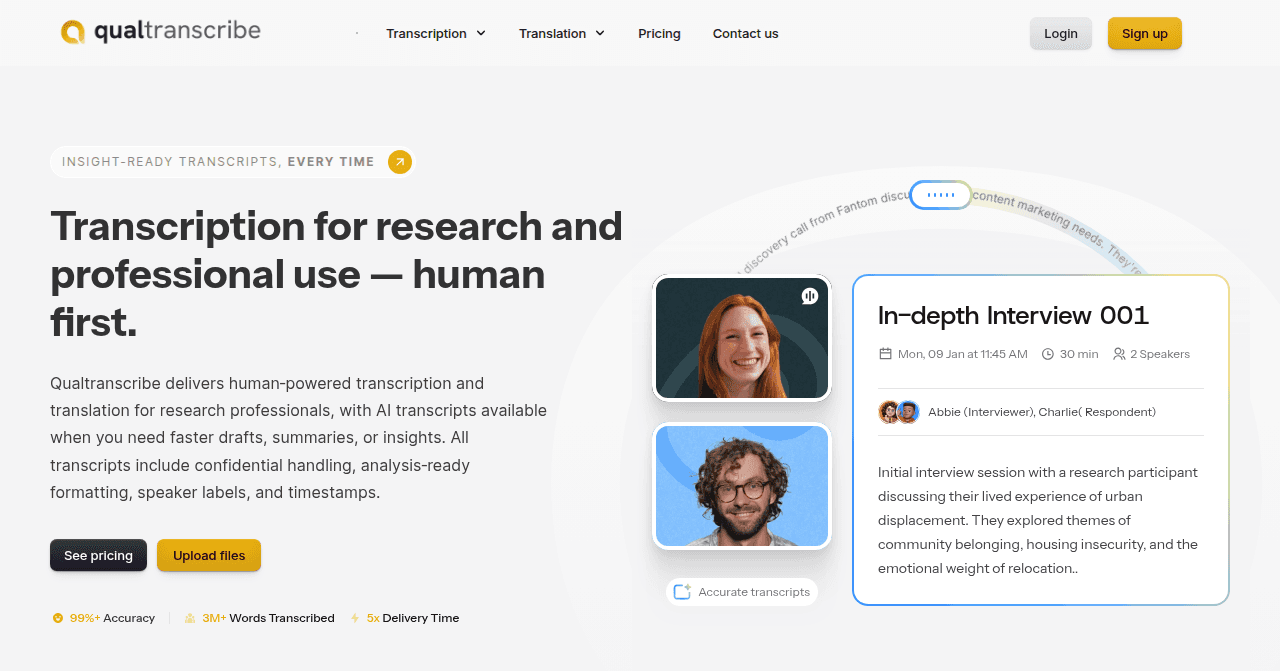
Most transcription services were built for podcasters and journalists and then retrofitted for research. Qualtranscribe started from the other direction. Every transcript is handled by a human transcriptionist matched to your subject matter, language, and dialect. Transcripts come formatted for NVivo, ATLAS.ti, and MAXQDA out of the box, which sounds like a small thing until you have spent a morning manually restructuring a forty-interview dataset before you can code a single line.
The compliance picture is more complete here than anywhere else on this list. HIPAA, GDPR, PIPEDA, and APPI are standard on every project, not gated behind enterprise contracts. Participant de-identification is available on request with a full de-identification log for IRB audit trails. Every file goes out under a signed NDA. For researchers who need a faster first pass, Instant Draft delivers AI transcription in minutes with Smart Insights that automatically pull themes, key quotes, and sentiment patterns from the recording.
The one honest limitation: human transcription in 25 languages is strong but does not match GoTranscript's 140+ language network. If your fieldwork spans many low-resource languages, check the full language list before ordering.
Pricing: From $1.20/min human transcription. Academic discounts available.
Turnaround: 24 to 48 hours standard. Rush available at $1.60/min.
Languages: 25 human, 99+ AI.
Compliance: HIPAA, GDPR, PIPEDA, APPI, IRB-compliant workflows.
Best for: Qualitative research, dissertation interviews, focus groups, multilingual fieldwork, clinical studies.
2. GoTranscript: Best for Language Range
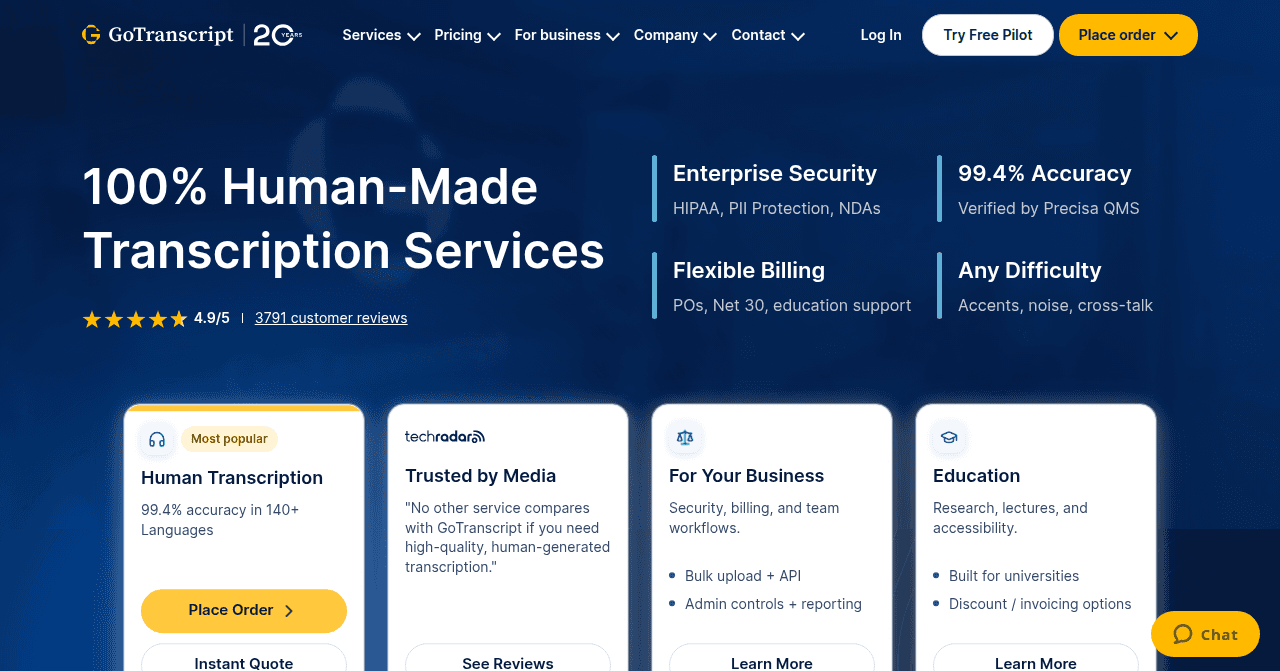
GoTranscript has been running since 2005 and the 140+ language network is genuinely impressive. Accuracy sits at 99.4% with a money-back guarantee backed by a four-stage quality assurance process. For high-volume multilingual transcription where breadth matters more than specialist research formatting, it is the strongest option available. See how it compares on research-specific features in our Qualtranscribe vs GoTranscript breakdown.
HIPAA compliance is available via BAA on eligible plans. GDPR compliant as standard. No IRB-specific workflows, no participant de-identification, and transcripts are not formatted for NVivo or ATLAS.ti. Worth knowing before you order if those things matter for your project.
Pricing: From $1.02/min standard. Rush and volume discounts available.
Turnaround: 6 to 24 hours depending on tier.
Languages: 140+.
Compliance: HIPAA via BAA, GDPR.
Best for: High-volume multilingual transcription without specialist research formatting requirements.
3. Rev: Fast English Transcription
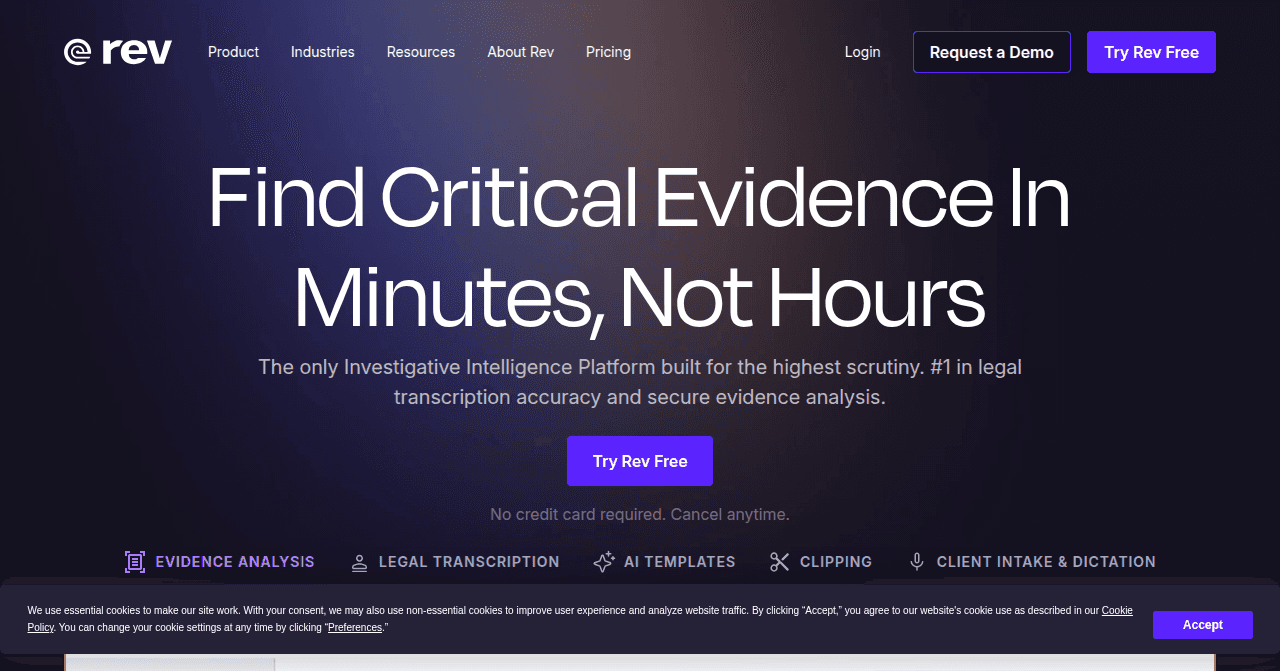
Rev is the most widely recognized name on this list, serving over 750,000 customers across journalism, legal, and corporate sectors. Human transcription is fast and English accuracy is strong. GDPR and SOC 2 Type II certified. HIPAA compliance is available for enterprise clients.
One thing researchers should know: Rev's Terms of Service, updated in 2023, permits the use of customer recordings to train its proprietary AI by default. Opt-out requires emailing Rev explicitly. For studies involving sensitive participant data, that is worth factoring in before uploading files. See the full picture in our Qualtranscribe vs Rev comparison.
Pricing: From $1.99/min human transcription.
Turnaround: 12 hours or less on standard orders.
Languages: Human transcription primarily English. 17 languages via AI.
Compliance: GDPR, SOC 2 Type II, HIPAA for enterprise.
Best for: Fast English transcription for journalism, podcasting, corporate content.
4. TranscribeMe: Good Tiered Pricing
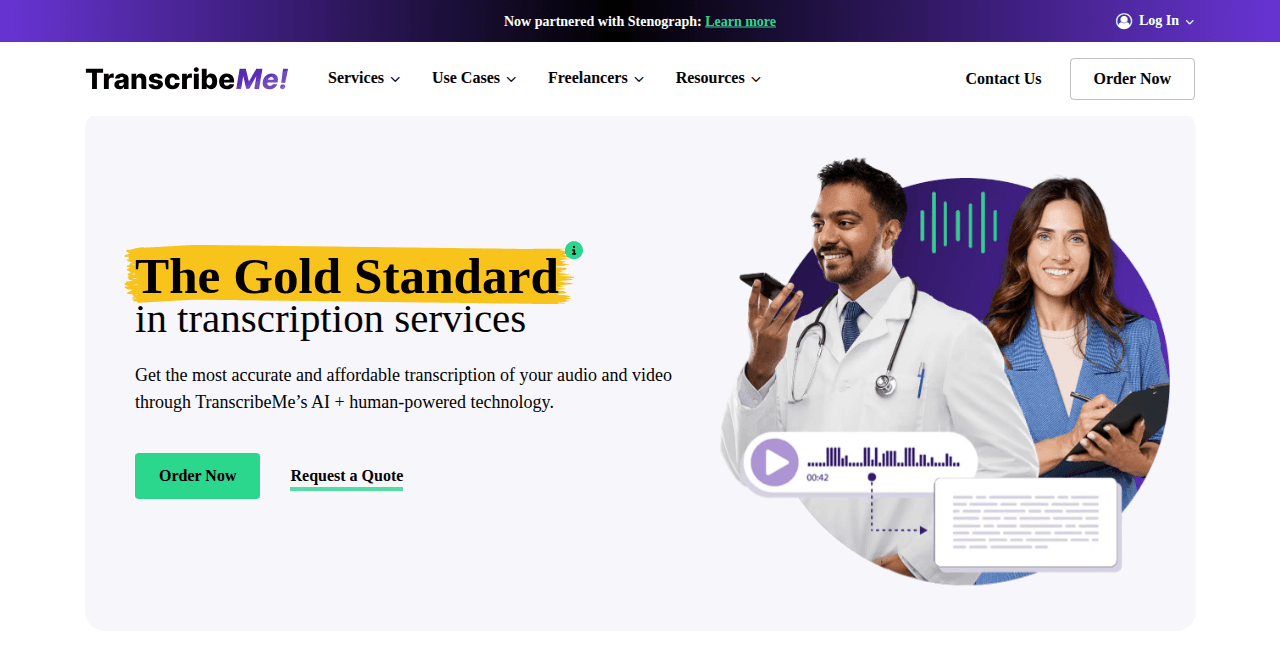
TranscribeMe has been running since 2011 with a hybrid AI and human model. The tiered pricing structure is useful if you need flexibility across a large project. A first-pass AI draft at $0.07/min, a standard human-reviewed transcript at $0.79/min, or full verbatim at $1.75/min (the $0.79 base plus a $0.96 verbatim add-on). Those are real options, not just marketing tiers.
HIPAA compliance requires pre-registration and dedicated workflow setup before you submit healthcare files. No IRB workflows, no de-identification, no NVivo formatting. See a full breakdown in our Qualtranscribe vs TranscribeMe comparison.
Pricing: AI from $0.07/min. Standard human from $0.79/min. Full verbatim $1.75/min.
Turnaround: 1 to 3 days.
Languages: Multiple on request.
Compliance: HIPAA via pre-registration, GDPR, CCPA.
Best for: High-volume projects with flexible accuracy needs and API integration requirements.
5. Way With Words: Good for Technical Content
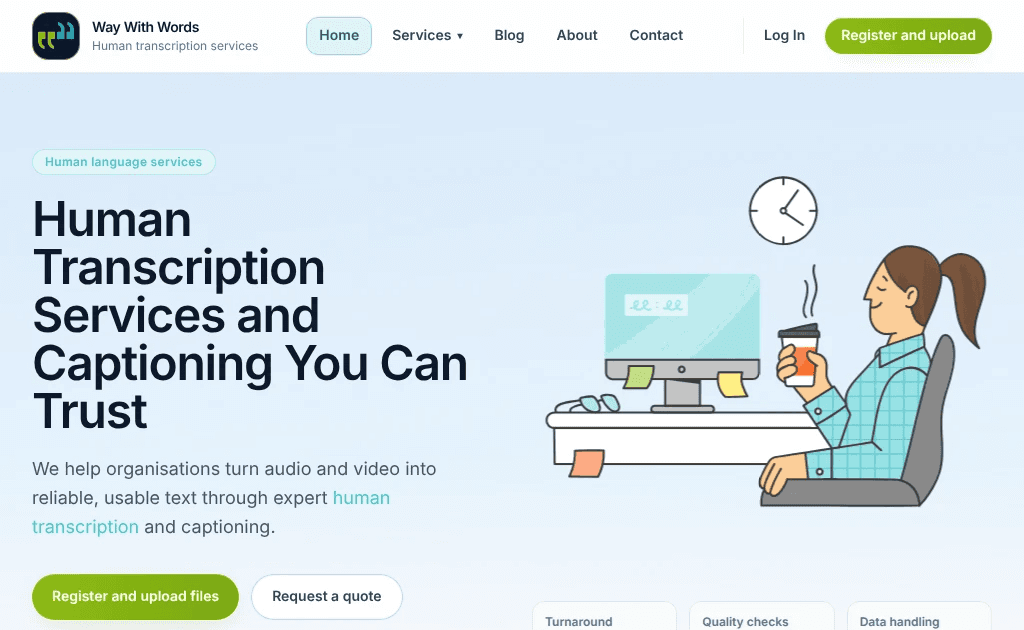
Way With Words has a strong track record on technically dense material: legal proceedings, medical interviews, academic lectures with specialist terminology. Transcriptionists are matched by subject matter, which makes a difference when you are working with content that generic services consistently get wrong.
GDPR compliant with secure data handling. No publicly documented IRB-specific workflows.
Pricing: From $1.30/min.
Turnaround: 24 to 48 hours.
Languages: English and major European languages.
Compliance: GDPR compliant.
Best for: Technical academic content, specialist terminology, European research.
6. Amberscript : Worth Considering for European Researchers
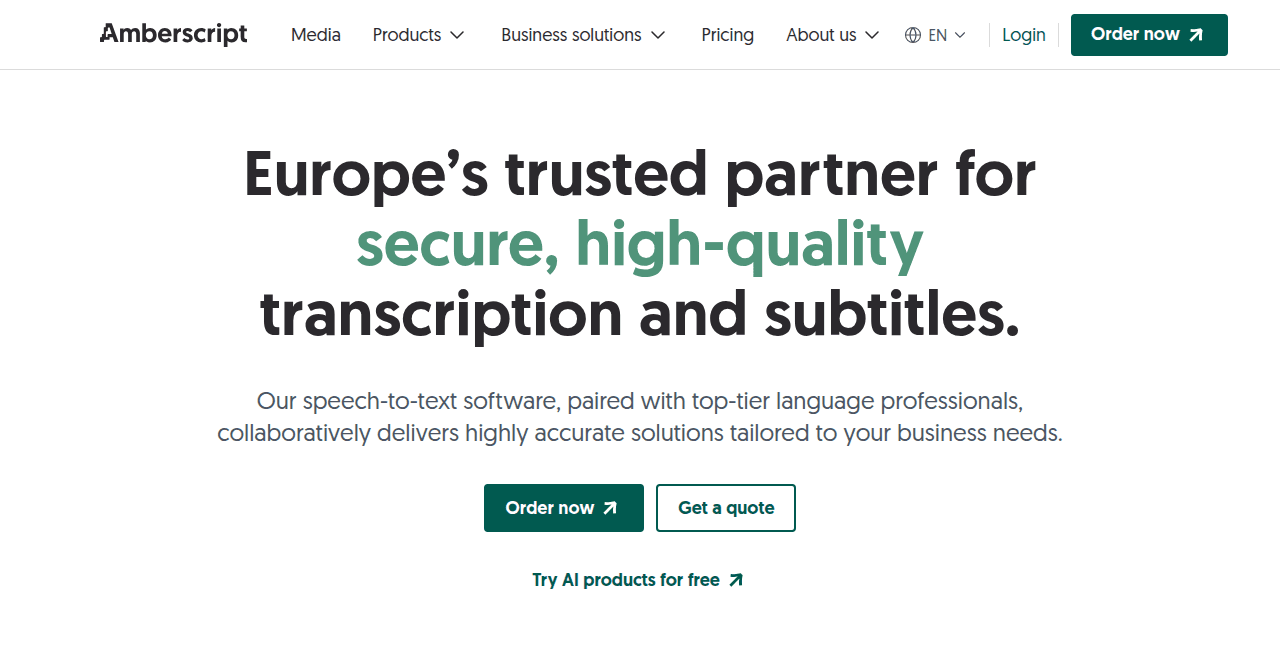
Amberscript is Netherlands-based with strong GDPR credentials and an in-platform editor for reviewing and correcting transcripts before export. Covers 39 languages with a clean interface. For European researchers who want GDPR-native workflows and prefer not to send files to US-based servers, it is a practical option. Turnaround is slower than most at 48 to 72 hours.
Pricing: From $1.50/min human transcription.
Turnaround: 48 to 72 hours.
Languages: 39.
Compliance: GDPR compliant, secure file handling.
Best for: European researchers, GDPR-native workflows.
7. Scribie: Budget Option for English Content
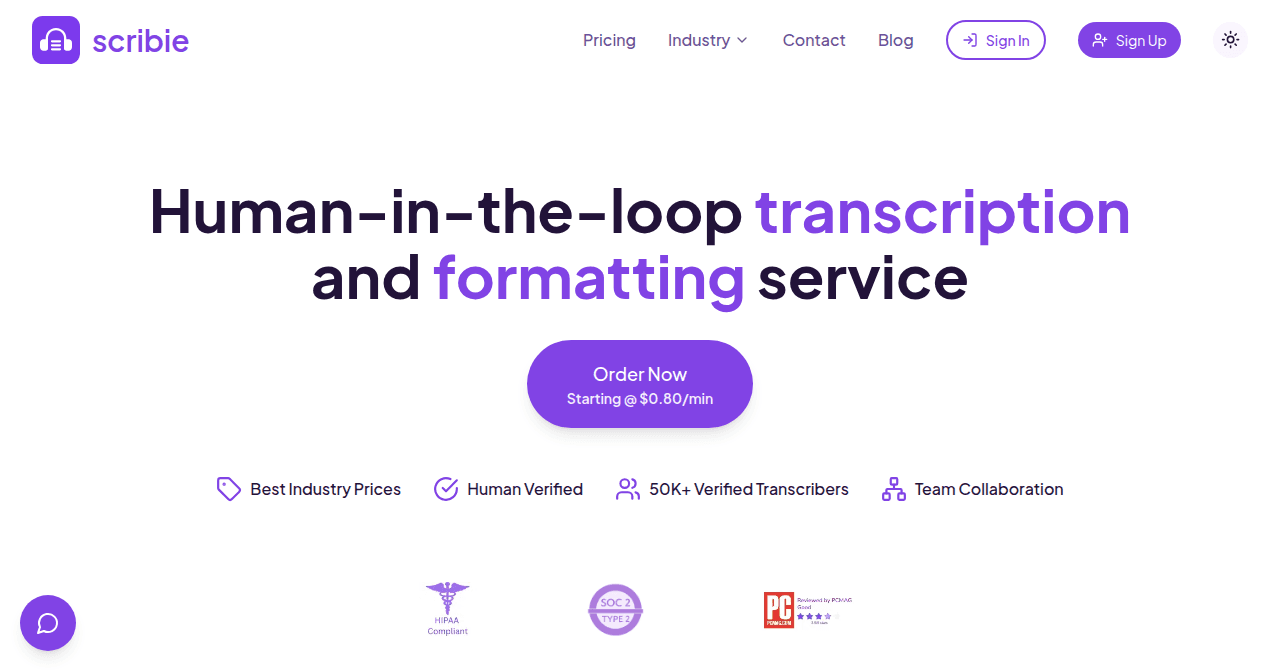
Scribie is the cheapest human-reviewed option on this list for English transcription. The platform is straightforward and turnaround is reliable. No NDA agreements, no IRB compliance, no research-specific formatting. For English-only, low-sensitivity content on a tight budget, it works. For any study with compliance requirements, it doesn't.
Pricing: From $0.80/min.
Turnaround: 24 to 36 hours.
Languages: English.
Compliance: Basic security. No NDA.
Best for: English-only, low-sensitivity content on a tight budget.
8. GMR Transcription — US Healthcare Focus
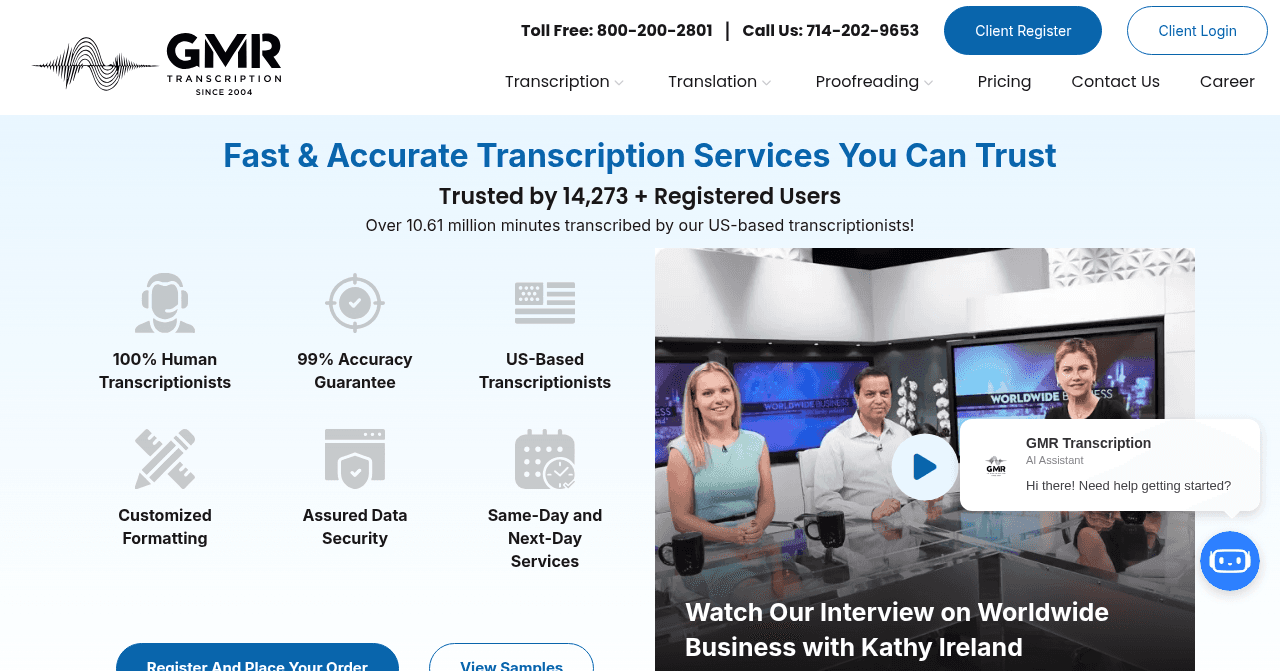
GMR Transcription focuses on healthcare and institutional clients in the United States. HIPAA compliance and strict confidentiality policies are the headline features. Designed for enterprises and research institutions with structured compliance requirements. English and Spanish supported.
Pricing: From $1.25/min for 1-2 speakers. Rates increase with additional speakers.
Turnaround: 24 to 72 hours.
Languages: English, Spanish.
Compliance: HIPAA, strict confidentiality policies.
Best for: US healthcare institutions, clinical research, institutional compliance requirements.
9. CastingWords: Flexible Pricing Tiers
CastingWords offers multiple transcription quality tiers at different price points. Primarily English, no documented NDA or IRB compliance features. Useful for low-sensitivity content where budget flexibility matters more than compliance depth.
Pricing: From $0.75/min.
Turnaround: 24 to 48 hours.
Languages: English.
Compliance: Secure platform. No NDA documented.
Best for: English-only research with low compliance requirements.
10. Ditto Transcripts: Popular with Universities
Ditto Transcripts serves universities, government agencies, and research institutions across the United States. Strong confidentiality measures, secure file encryption, and NDA availability make it a trusted option for institutional research.
Pricing: Custom institutional pricing available.
Turnaround: Fast with expedited options.
Languages: Wide range available.
Compliance: Strong confidentiality, NDA available, secure file encryption.
Best for: US universities, government agencies, institutional research teams.
How to Pick the Right Service for Your Study
Most of these services handle general transcription adequately. For research with real compliance requirements, the differences matter significantly.
IRB compliance. If your study involves human participants under IRB governance, you need documented IRB-compliant workflows, participant de-identification support, and an NDA as standard. Most services on this list cannot provide all three. Qualtranscribe can.
Multilingual fieldwork. For research conducted across many languages, GoTranscript's 140+ language network is the strongest option available. Qualtranscribe covers 25 human languages with specialist matching and 99+ AI languages.
Analysis software compatibility. Most services deliver a plain text document. Getting that into NVivo or ATLAS.ti in a usable format requires time you probably do not have. Qualtranscribe's academic transcription service delivers transcripts structured for direct import into qualitative analysis software.
Compliance beyond HIPAA and GDPR. Canadian researchers need PIPEDA. Japanese pharmaceutical research needs APPI. If your study crosses those jurisdictions, your options narrow quickly.
Budget. GoTranscript and Scribie are cheapest per minute. Qualtranscribe sits in the middle at $1.20/min and includes compliance, NVivo formatting, and specialist matching that most cheaper services charge extra for or don't offer at all.
Related Reading
Turn your recordings into analysis-ready transcripts.
Human Transcription
Clean verbatim and full verbatim transcripts, delivered by specialist transcriptionists
AI Transcription
Instant Draft powered by AI, with Smart Insights for analysis-ready output
Translation Services
Accurate translation across 99+ languages for multilingual research workflows
Keep reading
Related articles

The Best Transcription Services for Focus Groups in 2026
Focus groups generate some of the most demanding audio in qualitative research. Six to twelve people talking, sometimes over each other, sometimes in a room with bad acoustics, sometimes over a Zoom call with background noise from a home environment. Getting that audio into a clean, usable transcript is where a lot of research budgets and timelines get tested. Not every transcription service handles this well, and the right one often depends on the kind of focus group you're actually running.
Read article

Portuguese Transcription in Latin American Field Research: A Practical Guide
A research team returns from fieldwork across São Paulo, Recife, and Porto Alegre. Three cities, three clearly distinct accents, two weeks of interviews. Back at the institution, someone books a Portuguese transcriptionist. Nobody specifies which variety of Portuguese they need. The transcripts come back with Nordestino expressions normalized to São Paulo usage, a participant whose name appears in three different spellings, and no timestamps. Technically, the words are mostly right. As research data, the transcripts are close to unusable. This happens because transcription for field research in Brazil requires decisions that general transcription services don't prompt researchers to make.
Read article

How to Turn a 60-Minute Webex Recording into a 2-Minute Read
Picture this: someone drops a Webex link in your inbox with a note saying the answer to your question is "somewhere in the recording." Or you ran a 60-minute KOL interview three days ago, need to quote it accurately in a briefing, and your memory of what was said is already fuzzing at the edges.
Read article
© 2026 Qualtranscribe LLC. Services Provided Globally